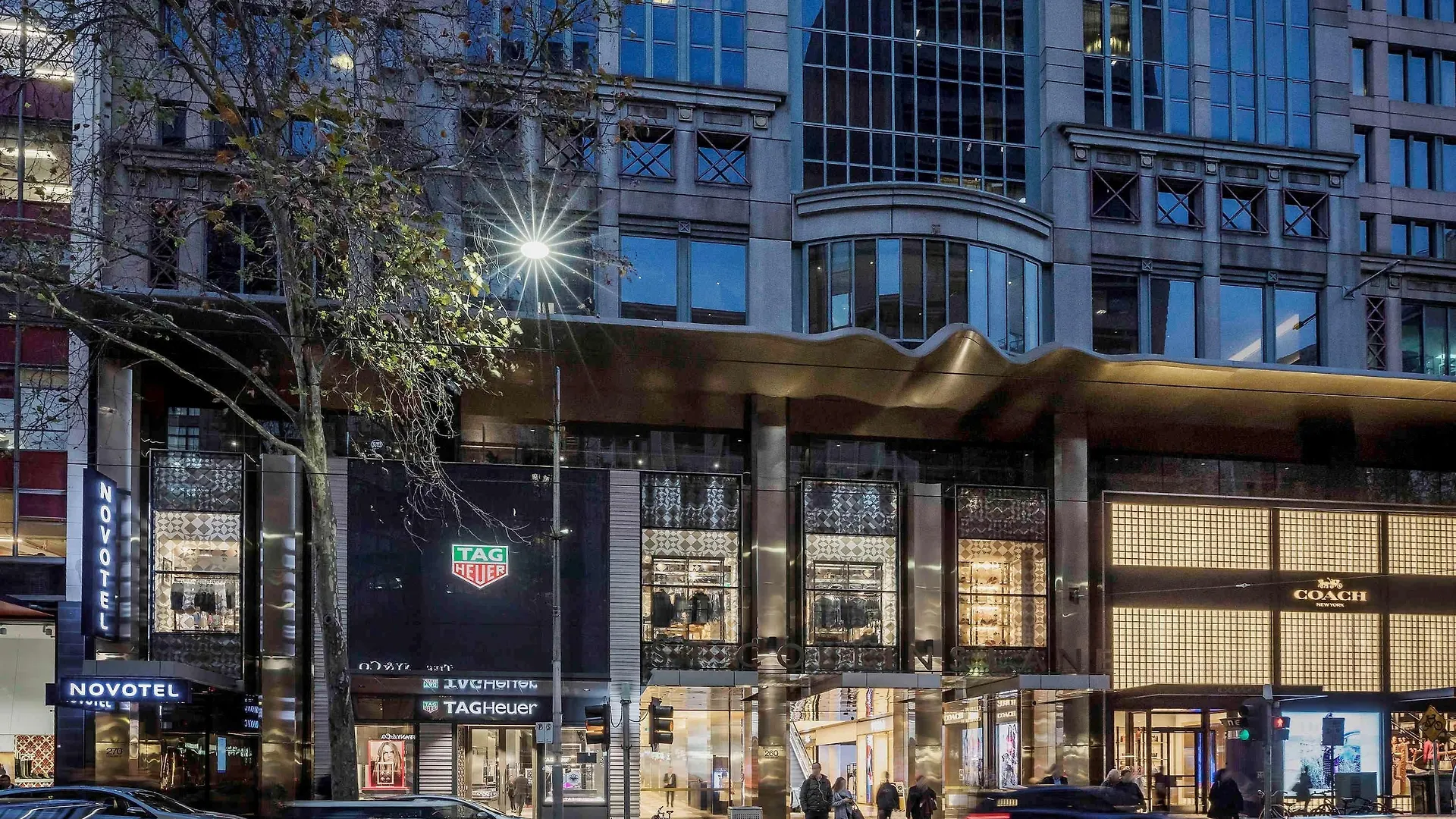
Melbourne CBD draws a specific type of traveller - one who wants design-forward interiors, direct access to the city's laneways and cultural corridors, and a base that functions as more than just a place to sleep. The two hotels featured here, Crown Promenade Melbourne and Novotel Melbourne on Collins, each deliver a distinct architectural identity within one of Australia's most walkable and design-literate city centres.
What It's Like Staying in Melbourne CBD
Melbourne CBD is a genuinely walkable grid - Flinders Street Station, Federation Square, the NGV, and Bourke Street Mall are all reachable on foot within minutes from most central addresses, and the Free Tram Zone covers the entire CBD at no cost. The rhythm here is dense and fast: Collins Street fills with office workers from early morning, Swanston Street stays animated well into the evening, and the Southbank precinct along the Yarra River hums with restaurant and entertainment traffic most nights. Travellers who base themselves here avoid the transfer time that eats into shorter stays, but those seeking quiet residential pace will find the CBD's energy unrelenting after dark.
Pros:
- * Zero-cost tram network across the entire CBD makes lateral movement between precincts effortless without a Myki card
- * Flinders Street Station puts you around 30 minutes from Melbourne Airport by Skybus or taxi, and directly connects to St Kilda, Richmond, and the MCG precinct
- * Around-the-clock food and entertainment options - from Degraves Street espresso at 7am to Crown's casino and restaurant floor past midnight
Cons:
- * Street noise from trams, nightlife, and construction is a real factor on lower floors, particularly on Swanston, Flinders, and Collins Street-facing rooms
- * CBD hotel rates spike sharply during major events - the Australian Grand Prix, AFL finals, and Australian Open all compress availability and push prices well above standard rates
- * Parking is expensive and logistically complex; the CBD is not the right base if a car is central to your travel plans
Why Choose Exceptional Design Hotels in Melbourne CBD
Design-focused hotels in Melbourne CBD do something that standard chain properties don't: they translate the city's architectural and cultural identity into the built environment of the rooms themselves - through materiality, spatial proportion, and considered interior sequencing. In this district, that means glass atria framing Collins Street couture blocks, floor-to-ceiling windows engineered for specific city-facing views, and common areas calibrated to function as social infrastructure rather than dead transit space. Room sizes in Melbourne CBD design hotels typically start at around 34 square metres for standard categories, which is notably larger than comparable European city-centre options, giving interiors room to breathe. The trade-off is rate: design properties here command a premium over standard CBD accommodation, and that gap widens further during event weeks.
Pros:
- * Spatial design that uses the CBD skyline as a deliberate visual element - city, bay, and river views are integrated into the room brief, not incidental
- * Common areas (pools, restaurants, lobbies) are architecturally coherent, functioning as destinations in their own right rather than hotel amenities
- * Business and wellness infrastructure (spas, fitness centres, meeting suites) is built to a higher specification than standard-tier CBD hotels
Cons:
- * Premium pricing means these properties are rarely the lowest-cost option in the CBD, even during shoulder season
- * High occupancy during conference season (March-May, September-November) can affect service responsiveness and pool or restaurant access
- * Design-forward rooms prioritise aesthetics; storage and practical layout features can be secondary in smaller room categories
Practical Booking & Area Strategy for Melbourne CBD
For design hotels specifically, micro-location matters in Melbourne CBD. Collins Street from Spencer to Swanston is the city's most architecturally significant commercial corridor - staying on or immediately off it puts you within a 10-minute walk of Federation Square, Hosier Lane's street art precinct, and the NGV on St Kilda Road. Whiteman Street in Southbank, where Crown Promenade is located, gives direct access to the Yarra riverfront promenade and the Crown Entertainment Complex - a different urban character to the Collins Street axis, calmer in daytime but busier at night. Book at least 8 weeks ahead for Australian Open (January) and Grand Prix (March) windows, when CBD design hotels sell out entirely and rates can climb steeply. For those arriving outside peak event periods, late autumn (April-May) offers the most manageable crowd levels across the CBD, with Federation Square, the laneways, and the Southbank dining strip all operating at a pace that makes exploring on foot genuinely enjoyable.
Things to do within walking distance include Hosier Lane, the Ian Potter Centre at Federation Square, the Queen Victoria Market (around 15 minutes north on foot), and the SEA LIFE Melbourne Aquarium on the Yarra riverfront. Flinders Street Station on the CBD's southern edge connects to every major suburb without the need for a taxi.
Best Value Stay
Novotel Melbourne on Collins anchors the value tier here - it delivers genuine design credentials on one of Melbourne's most recognisable streets without the premium attached to Southbank's entertainment-complex positioning.
-
1. Novotel Melbourne On Collins
Show on map


Best Premium Stay
Crown Promenade Melbourne occupies the premium tier - positioned on Whiteman Street in Southbank, it is directly integrated into Crown's casino and entertainment complex and engineered around its indoor infinity pool, Yarra-facing skyline views, and full-spectrum wellness floor.
-
2. Crown Promenade Melbourne
Show on map


Smart Travel & Timing Advice for Melbourne CBD
January and March are the most expensive months to book design hotels in Melbourne CBD - the Australian Open (January) and the Formula 1 Australian Grand Prix (March) compress availability across all tiers simultaneously, with rates climbing steeply and cancellation policies tightening. April and May represent the clearest window for value: crowds thin, the weather settles into Melbourne's distinctive cool autumn clarity, and both Southbank and the Collins Street precinct operate without the logistical friction of major event weeks. For a first CBD stay, around 3 nights gives enough time to cover Federation Square, the laneways, Southbank, and a day trip to St Kilda or Richmond without feeling rushed. Book at least 8 weeks out for any January, March, or September stay - September brings the AFL finals to the MCG, which drives CBD occupancy up sharply. Last-minute bookings in the CBD can occasionally surface on mid-week nights in June and July, when Melbourne's winter quiets leisure travel, but availability at design properties specifically remains unpredictable. If flexibility is possible, Tuesday to Thursday check-ins consistently yield better rates than weekend arrivals at both Novotel on Collins and Crown Promenade.